Showing posts with label Music DVD Review. Show all posts

Tuesday, November 30, 2010

Music/Concert DVD Review: Rolling Stones: Let's Spend the Night Together (1981)


Now Available to Own 


Regardless of the fact that it was a brand new track when Harold and Maude filmmaker Hal Ashby and his Being There cinematographer Caleb Deschanel shot the Stones concert film Let's Spend the Night Together in 1981, Mick Jagger waits until roughly the middle of the set-list to unleash “Start Me Up.”

Instead, as a natural born entertainer who most likely is “on” every waking minute of his life, it's only fitting that Jagger kicked off the show with “Under My Thumb.”

Looking out into a massive crowd that's roughly the size of an ocean, Jagger sings at admirers rather than to them.

Thus, knowing full well that in stark contrast to Thumb's openly misogynistic lyrics wherein he likens an obedient girlfriend to “the sweetest pet in the world,”when Jagger opens with that tune he's changing the meaning completely, acknowledging that his captivated audience has become his largest, highest paying pet in the world.

And unfortunately, this is the biggest part of the problem as although we see a polished, highly energized Jagger lunge onstage, he's been started up to go through his chart-toppers completely on dispassionate autopilot.

Gyrating wildly in what has become his trademark “eroticism” that leaves nothing to the imagination, Jagger tries to force sex into some of his most earnest hits, forgetting the fact that not everything works well as a double entendre when you're applying the double meaning in laughable crotch-accentuating football pants.

In my mind, there's absolutely nothing sexier than the right rhythm and blues laced Rolling Stones song and especially the ones that allow death-defying guitarist Keith Richards the chance to wail and this could've only been heightened with a more bare-bones, intimate venue concert. Sadly and aside from the inclusion of a jukebox worth of Stones hits, there's nothing less sexy than the performance on this DVD.

Seeing Jagger's androgynous presentation as a cross between Olivia Newton John's jazzercise aerobics favorite “Let's Get Physical” and glam rock era David Bowie is the equivalent of “baby, I've got a headache.”

And given the stellar material of the Stones catalog, I think he'd be much more effective without the cold shower inducing pomp and neon circumstance of the '80s arena rock concert venue and weird Aerosmith flag plus football attire approach.

Throughout, Jagger speeds through classics he must be tired of singing like “Jumpin' Jack Flash,” so that we lose the punch of those pre-punk, post-Dylan poetic lyrics about being “born with a spike right through my head.”

Essentially, he's the only band member that tries to ignite lust or excitement in the audience (even if by force) as amusingly even a parade of gorgeous girls during “Honky Tonk Women” can't distract the perpetually smoking Ron Wood and Keith Richards from showing each other their killer guitar skills.

And while we'd love to know exactly what he seemed peeved about, privately mouthing off to himself after it appeared as though Ron Wood gave Jagger some direction, Ashby's film remains a slick commercial concert piece.

Obviously, Let's Spend the Night Together may please some die-hard fans looking for a quickie that masquerades as a one-night stand. However since I prefer a musical love affair, let's just say that athletic wear and male eyeliner simply doesn't “Start Me Up” like hearing the album version of “Satisfaction.”


Text ©2010, Film Intuition, LLC; All Rights Reserved. http://www.filmintuition.com Unauthorized Reproduction or Publication Elsewhere is Strictly Prohibited and in violation of the Digital Millennium Copyright Act.  

FTC Disclosure: Per standard professional practice, I received a review copy of this title in order to evaluate it for my readers, which had no impact whatsoever on whether or not it received a favorable or unfavorable critique.

Tuesday, August 10, 2010

Music Documentary Review: Parting Ways: An Unauthorized Story on Life After The Beatles


Now Available to Own


AKA: The Beatles: Parting Ways; Parting Ways: The Beatles

In this brief fifty-one minute unauthorized documentary best suited for television broadcast rather than purchase or even rental, filmmakers chronicle the lives of the Fab Four following the breakup or rather more fittingly dubbed “divorce” of The Beatles.

Although for the most part it fails to shed much new light on its subject, Parting Ways nonetheless makes for passable entertainment that's sure to appeal to die-hard fans.

A rather one-dimensional overview of post-Beatlemania existence for the men that's told in the order of their involvement with the band, the DVD from Infinity Entertainment Group presents their mini biographies from “the first Beatle” aka John Lennon all the way up through the last (Ringo Starr).

Admittedly it does come as a bit of a surprise that the disc delves into the usually ignored eighteen month separation of John Lennon and Yoko Ono that he spent with Yoko's assistant May Pang, with whom Yoko suggested that John take up in the early '70s.

However, one of the eerier focuses of the disc considers the effect of Lennon's death by assassination on the remaining Beatles. While the DVD reveals that Paul McCartney became especially weary of touring, Parting Ways delivers a startling blow by illustrating the impact it had on George Harrison who is painted as something of a near hermit for not leaving his estate much, only to find in a cruel twist of fate that he became the target of a home invasion by a mad stabber, whom he fortunately was able to outmaneuver.

Thankfully the disc doesn't spend the majority of its running time fixated on the macabre as it celebrates the individual musical achievements the four had following their split and the way that in some cases they ended up collaborating on other material.

Yet considering its incredibly short running time, it isn't able to go into great detail regarding their various professional accomplishments and winds up glossing over recent releases of The Beatles Rock Band game and the Cirque du Soleil show “Love.”

Retaining its small screen style look of a full frame aspect ratio and 2.0 sound, although the disc offers four bonus featurettes that center on everything from Stella McCartney's role in fashion to the men's spiritual exploration, overall it seems to blend right into the background of way too many superior Beatles retrospectives.


Text ©2010, Film Intuition, LLC;
All Rights Reserved. http://www.filmintuition.com
Unauthorized Reproduction or Publication Elsewhere is Strictly Prohibited and in violation of the Digital Millennium Copyright Act.

FTC Disclosure: Per standard professional practice, I received a review copy of this title in order to evaluate it for my readers, which had no impact whatsoever on whether or not it received a favorable or unfavorable critique.

Friday, June 11, 2010

Music DVD Review: You Really Got Me -- The Story of The Kinks (2010)


Now Available to Own


Devoting nearly ninety minutes edited like a record into nine Kinks song based selections from “Everybody’s A Dreamer” through “Changes,” You Really Got Me: The Story of The Kinks is best appreciated from a musical perspective rather than from a historical one.

Although it chronicles the “quintessentially British” British Invasion band from their first smash single (the eponymous “You Really Got Me,” which was the guys’ third release) up through their induction into The Rock and Roll Hall of Fame Museum, those hoping for an authoritative, eye-opening expose on the musicians will be disappointed with the result of this region free DVD.

However, for avid fans, You Really Got Me is a goldmine of rare performance footage that showcases not just the band’s biggest chart toppers like “Sunny Afternoon” and “All Day and All Of the Night,” but also works in some of the vintage rhythm and blues tracks and the group’s country/folk phase with cuts like “Muswell Hillbilly,” “Milk Cow Blues,” “Low Budget,” and more, going as far as to include the length of each one of over twenty songs right on the back of the DVD case.

With a fascinating biographical printed portrait contained in the inner sleeve penned by Jon Kirkman, the work from ABC Entertainment tries to present the best of both worlds by making up for what the DVD lacks in factual content with its overall presentation as a cross between a documentary and an album.

Still, there’s no doubt that You Really Got Me will make you curious to discover the real story behind the cited “unspecified reasons” why the band was banned from America from 1965-1969.

Additionally you'll long to learn more about The Kinks’ charismatic leader Ray Davies who took the sound of the music in several directions throughout its heyday, making the group influential to various genres and schools of performance from punk to New Wave when it became something of a “cult band” in the 1970s.


Text ©2010, Film Intuition, LLC;
All Rights Reserved. http://www.filmintuition.com
Unauthorized Reproduction or Publication Elsewhere is Strictly Prohibited and in violation of the Digital Millennium Copyright Act.

FTC Disclosure: Per standard professional practice, I received a review copy of this title in order to evaluate it for my readers, which had no impact whatsoever on whether or not it received a favorable or unfavorable critique.

Friday, May 28, 2010

Music DVD Review: I Need That Record! The Death (Or Possible Survival) of the Independent Record Store


Now Available to Own


Once “MP3” replaced “sex” as the term most searched for on the world wide web, the music industry knew that they were in trouble. And though the Napster years may indeed be over, the iTunes years keep on growing, much to the chagrin of CD sellers everywhere let alone independent record store owners.

Yet is the click-record-distribute option of MP3 really to blame for the downfall of the independent record store or is it a combination of several factors?

Filmmaker Brendan Toller decides to investigate in his entertaining, hip and freshly edited title I Need That Record! The Death (Or Possible Survival of the Independent Record Store). In investigating why roughly three thousand stores have closed shop during the past ten years, he points a whimsical finger at the main culprits including Big Box Stores like Best Buy or Wal-Mart that can sell a CD at ridiculously low prices in the hopes of guaranteeing a sale on bigger ticket items as well as the record industry itself which took a darker spin in the 1980s when MBAs took over the executive positions and music lovers were pushed out of the decision making business.

However more than just whining about “the man,” Toller is an insightful filmmaker who offers us a succinct yet fascinating history about the way that music and money has always overlapped from the old payola scandals with DJ Alan Freed up through the commercialization of radio via the Telecommunications Act which finds Clear Channel owning 1 in every 10 stations that play the same music 73% of the time.

Additionally, in arguing for the need to create a profitable business model so that independent community oriented stores could stay in business and compete with CD prices, Toller looks at some of the contradictions in marketing wherein an unknown Amy Winehouse album sells at an impossibly low introductory rate until it goes up roughly ten dollars when she becomes in demand.

Filled with Catch 22s and passionate people, the film is imbued with some unexpected bursts of animation both literally and in the colorful personalities of those interviewed. Moreover, it's the type of work that not only celebrates the local stores that help foster friendships, bands and in some cases save lives but also makes the viewer take a little responsibility in reexamining their downfall from radio to record to CD to MP3.

Rightfully it argues the importance of the stores in catering to an under-served niche of music savvy collectors as radio listenership is at a 27 year low in celebrating diversity and opening one's heart, mind and ears to music they may otherwise miss in a world of Top 50 pop music that fails to foster unique tastes. Likewise, the film is certain to cater not only to its built in audience of indie stores still with open doors but music aficionados and audiophiles as well.

Due to its brisk 77 minute running time, Toller is unable to offer an authoritative historical analysis on the many issues introduced and we wish he would've gotten much more on film from music historians or scholarly sources instead of just “man on the scene” interviews. While the DVD is bursting with hours of bonus interviews in the special features section, overall the great thing about the documentary as mentioned is it invites you to do more research on your own and consider just how much you value the choices you're able to make at independent stores verses the ease of Big Box stores or Clear Channel radio.


Text ©2010, Film Intuition, LLC;
All Rights Reserved. http://www.filmintuition.com
Unauthorized Reproduction or Publication Elsewhere is Strictly Prohibited and in violation of the Digital Millennium Copyright Act.

FTC Disclosure: Per standard professional practice, I received a review copy of this title in order to evaluate it for my readers, which had no impact whatsoever on whether or not it received a favorable or unfavorable critique.

Music DVD Review: The Rolling Stones -- Rare and Unseen


Now Available to Own


In the words of former Rolling Stones member Bill Wyman – dubbed “the historian of the band” since he's the one who remembers dates and places – it was much nicer to perform for audiences as they aged since initially they just wanted to see the Stones and then as time went on, they wanted to listen to the music.

However, the folks from MVD Visual's Rare and Unseen Collection are hoping that after more than four decades of Rolling Stones fever, fans will still want to see more of Mick, Keith and the rest of the guys in this alternatively fascinating yet at times haphazardly pieced together sixty-four minute work.

Without the benefit of going in chronological order or establishing the type of place-markers of date and location that no doubt Wyman or others could've assisted with, this collection of rare footage simply moves in far too many directions at once. Therefore, unless you are an amateur historian of the band and know all of its present and past members, it can get pretty confusing pretty quickly as we wonder who is talking or where they are in the timeline of the albums, the singles, or the many evolutions of the band.

Inter-splicing photos and clips of the group alongside interviews and text bubbles here and there, while the presentation fails to make this one recommendable to anyone other than die hard fans, for those who dig the Stones, there's enough contained in the piece to fascinate you.

In a key sequence, it includes some nice contradictory moments for Mick Jagger taking one stance on an issue one moment before it cuts to a scene a few decades later (moving from black and white to color) where he decides to ignore his stance and speak up about politics, illustrating the way that the band has aged right along with its audience in terms of maturity, responsibility etc.

In the short spin we see Mick Taylor's admission that Jagger could be a bit difficult to footage from Jagger's marriage to Bianca to the differences in touring from playing “rinky dinky rinky” joints with a “big” crew of thirty guys to finally waiting until 1998 to play Russia, which had banned their performances for decades.

And throughout there's enough substance to keep you interested even if you have a hard time feeling invested in the documentary when we simply view sound free film of Mick Jagger at a Red Carpet event or spend time during a drug trial interview that doesn't make a whole lot of sense without the context.

Overall, a mixed bag of footage transferred as well as can be expected considering the age of some of the pieces included, The Rolling Stones Rare and Unseen may be worth a casual look for a die hard fan but casual ones are sure to fail to gain any real satisfaction from it after all.


Text ©2010, Film Intuition, LLC;
All Rights Reserved. http://www.filmintuition.com
Unauthorized Reproduction or Publication Elsewhere is Strictly Prohibited and in violation of the Digital Millennium Copyright Act.

FTC Disclosure: Per standard professional practice, I received a review copy of this title in order to evaluate it for my readers, which had no impact whatsoever on whether or not it received a favorable or unfavorable critique.

Friday, April 23, 2010

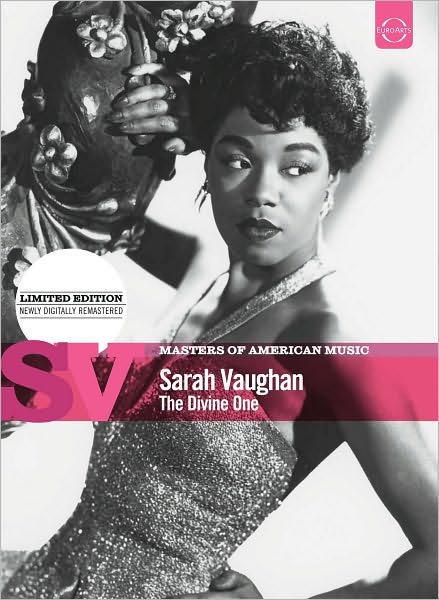
Music DVD Review: Masters of American Music -- Sarah Vaughan: The Divine One (1993)


Delicious
Bookmark this on Delicious
submit to reddit
Print Page

Digg!

MovieBlips: vote it up!

Even though the fact that she could push a one syllable word throughout a rollercoaster of her three plus octave range by dragging it out as though it were five syllables both endeared and infuriated the fans of Sarah Vaughan, she nonetheless ranked number one for five consecutive years as the “favorite girl singer” of her era.

Fluent in jazz, pop and bebop, Vaughan never encountered a standard song she wanted to sing straight, which was why her interpretation of “Body and Soul” sung on a dare in a contest as a teenager soon found her joining big bands where – much like Billie Holiday – she used her voice as an instrument to spontaneously get into the freewheeling rhythm as though it were a trumpet or saxophone.

Known as The Divine One to the fans who likened Vaughan to operatic diva royalty, dubbed Sailor by those who new “Sassy” Sarah best for her gift to “out-cuss Popeye the Sailor Man” with the boys on the road, the diverse Ms. Vaughn is profiled in this compelling and beautifully preserved piece of musical portraiture.


Part documentary, part interview retrospective, and part musical performance, the Masters of American Music Limited Edition digitally remastered, region free, Sarah Vaughan: The Divine One is a delight for fans eager to discover more than just the bare minimum of biographical facts.

And this intimacy is what we're treated to from those who knew her best including the two she lived with in the form of her mother and her daughter – both of whom speak candidly about the private, professional Vaughan who had a big heart that was often broken but who managed to touch the hearts of so many all with that signature voice.

Although it clocks in at merely fifty-six minutes, the DVD which plays worldwide in all models of players as a Region 0 disc offers some lush performance footage that showcases Vaughan at various periods in her extraordinary career, highlighting the admirable way that unlike many jazz artists she was able to transcend musical genres and continue to have a career for five decades.

From “I've Got a Crush on You” to some of her most famous interpretations of “Misty,” “Somewhere Over the Rainbow” and “Send in the Clowns,” it's a beautiful work all around, even if it ultimately leaves you wanting more... much like a talented “girl singer” who stretches out the notes before exiting the stage to thunderous applause and cries of “Encore.”

One of four new discs released in the Masters of American Music series including titles devoted to John Coltrane, Count Basie and the blues with Bluesland, Sarah Vaughan: The Divine One follows the successful launch of the previous quartet of jazz themed limited edition bows in late 2009.


Text ©2010, Film Intuition, LLC; All Rights Reserved. http://www.filmintuition.com

Unauthorized Reproduction or Publication Elsewhere is Strictly Prohibited and in violation of the Digital Millennium Copyright Act.

FTC Disclosure:
Per standard professional practice, I received a review copy of this title in order to evaluate it for my readers, which had no impact whatsoever on whether or not it received a favorable or unfavorable critique.

Monday, December 28, 2009

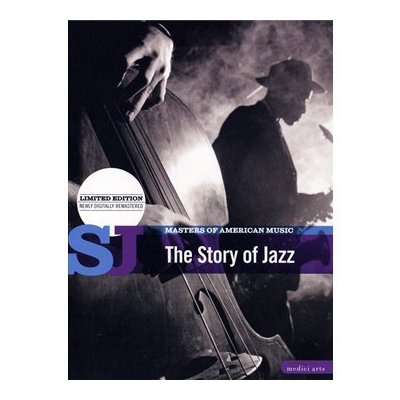
Music DVD Review: Masters of American Music, Volume 4: The Story of Jazz (1995)


Now Available to Own


Delicious
Bookmark this on Delicious
submit to reddit
Print Page

Digg!

MovieBlips: vote it up!

Before Ken Burns debuted his epic PBS documentary smash Jazz in 2001, the award-winning multiple volume installments of the genre had struck a chord with audiences in the Masters of American Music series in the '80s and '90s, filtering into living rooms via VHS or televised broadcast.


For the first time since their debut more than a decade ago, this award-winning and highly acclaimed series has been released to jazz aficionados the world over, as Masters of American Music's first four volumes premiere on Limited Edition, slim-packaged all-region (aka Region 0 or Region free) DVDs ensuring that they'll play in all parts of the world.

While 2010 will bring more volumes to fans with the second installment's release of titles that focus on John Coltrane, Sarah Vaughan, Count Basie, and a special history of the blues dubbed Bluesland, the initial quartet of digitally remastered discs are dazzling.

Assuming that it would be the first volume in the collection, I opted to play The Story of Jazz first before I discovered that it was actually the fourth installment. As I soon learned, Masters of American Music originally kicks off with exclusive specials focused solely on three of the most influential Masters themselves including the impressive "first and only authorized documentary" of Charlie Parker entitled Celebrating Bird which earned recognition and accolades from organizations including the American Film Institute in 1987.

Following up this portrait of Bird in an era that also found popular culture embracing Parker in Clint Eastwood's biopic of the same name, were the two other Masters selections, namely the Cable ACE award-winning documentary Lady Day: The Many Faces of Billie Holiday (Volume 2) and Volume 3's more intimate study of Thelonious Monk: American Composer.


The latter title sought out to present "the first fully rounded portrait of Monk" as opposed to the traditional way he was "often portrayed as not simply eccentric but crazy" by focusing on the bebop pianist's strength as a "witty satirist" who became "jazz's first major composer after Duke Ellington."

Yet, since I've dissected documentaries on the other figures before and wanted to focus on the heart of the series, I went right to The Story of Jazz first, which-- just like the others-- is fascinating not only for its historic footage of rare performances and inclusion of figures usually overlooked but also due to the straightforward and approachable narrative.

Since jazz can be such a daunting genre, as noticed in Burns' exhaustive but incredibly well-researched presentation, I appreciated the choice not to dwell on every single facet of each movement from its roots in West Africa to its official New Orleans birthplace and various incarnations including big band, swing, bebop, bop, free, and fusion.

No, the documentarians instead avoided minutia by opting to engage us by simultaneously inspiring our own interaction to look up more figures they discuss briefly and/or to look forward to the future in-depth releases on those we're particularly fascinated by including singer Sarah Vaughan who will receive her own volume in 2010.

Recipient of the 1995 Swing Journal award for the Best Music Program of the Year, The Story of Jazz-- similar to the rest-- was derived from a wide array of in-depth footage including more than 80 interviews with insiders and experts who understand the music, the players, and its impact on our history very well.

Additionally, correcting the main belief that it's simply an American art form and overall as purely American as "baseball," "national parks," or "apple pie" (two of which have also been the subject of Burns documentaries), the fact that the Masters of American Music series can be played on DVD in all regional country coded players is extremely fitting as the thesis of this set takes the "American Music" to an international level.

To this end, jazz is evaluated-- especially in The Story of Jazz, perhaps more than some of the biographical portrait discs-- as one of the globe's "greatest art form[s] of the twentieth century."

With its West African roots and the acknowledgment that Latin rhythms found their way into the music along with more international flavors as it gained in popularity in Europe and abroad, the all-encompassing genre of "jazz" eventually morphed into the epitome of one of its signature improvisational jams that can go on endlessly.

Still, the title impressed me even more for ensuring that figures like Bix Beiderbecke, James P. Johnson, Scott Joplin, and Buddy Bolden all received their due alongside the more popular and familiar names of Duke Ellington, Fletcher Henderson and others. Similarly, I couldn't help realizing that even those who may argue that they're averse to jazz and find their appreciation for the arts is firmly planted in other genres or realms like film, painting, or comedy, will definitely want to explore this work regardless.


For, although it's definitely suited and designed specifically for jazz fiends, the one underlying theme that pervades is that before someone like Thelonious Monk, Louis Armstrong or Duke Ellington can become a legend, they must have a strong foundation of knowledge in their subject.

In other words, if you don't understand chord progression, you certainly can't bebop or bop and swing definitely won't mean a thing if you don't know your scales and it's the reminder of just how much knowledge and dedication to their craft (whether formally or self-taught) was required in the development of the art form. This is especially evident when musicians ventured from standard technical requirements to free or fusion jazz that again makes it seem perfectly natural that many actors and comedians liken clicking in a scene or working together to playing music or creating "great jazz."

Whether you use the word "flow" as a writer when discussing the way that words will pour out of you or remain stranded when you're blocked or acknowledging that you can't attempt impressionistic or expressionistic painting without mastering still-life beforehand, the end result is always "jazz."


Thus, the music is the very essence of joyous, unrestrained, creative expression that's necessary to challenge yourself to study. While I recommend listening to more varieties to find what you like, I feel strongly that a basic documentary will do the trick. And sure enough-- and possibly without even realizing it the first time around-- The Story of Jazz will hip you to the fact that what you assumed was "just noise," has suddenly echoed off the screen and as Charles Mingus phrased it, get you "Hit in Your Soul" by the sound of creativity.


Text ©2009, Film Intuition, LLC; All Rights Reserved. http://www.filmintuition.com

Unauthorized Reproduction or Publication Elsewhere is Strictly Prohibited.

FTC Disclosure: Per standard critical practice, I received review copies of Masters of American Music in order to evaluate what it was I was writing about truthfully and as a professional journalist, the receipt of titles had no bearing on whether or not they received a favorable review as jazz fans are much more prepared to label something "bad jazz" if the flow is way off.

Music DVD Review: The Who, The Mods and The Quadrophenia Connection (2008)


Now Available to Own


Delicious
Bookmark this on Delicious
submit to reddit
Print Page

Digg!

MovieBlips: vote it up!

When rhythm and blues rock skipped across the pond in the 1960s, the impact of its final splash flooded the terrain of UK music for the decade to come. Ultimately it inspired groups of young men to embrace old twelve bar blues riffs and experiment with the sound of what was traditionally dubbed "black American soul music" in bands such as The Animals, The Yardbirds, The Zombies, The Kinks, Cream, Led Zeppelin, along with The Who.


Following the success of their tune "I'm the Face" and back when the quartet who would later introduce the world to rock operas were still known as the then-fashionable sounding High Numbers, their enigmatic guitarist (and father of the "windmill" strum) Pete Townshend listened to the popular Kinks single "You Got Me," and stated that he "could do that."


The result was the iconic '60s Who track that not only became a youth anthem with the title of "My Generation" but also cleverly worked in lyrics that the group knew who garner them even more press than The Kinks had received via the snarled ultimate anti-establishment message of "I hope I die before I get old."

The song reigned on the charts long before "Love" would do the same for Townshend on Quadrophenia and its impact on their generation has caused some music critics to argue that The Who were in fact "punk before punk," a full decade before the '70s movement would later be epitomized in British '70s acts like The Clash and The Sex Pistols.


Yet whether or not you hold the same belief since the modern young men in their "Mod" apparel who influenced the Mods in both British movements don't exactly fit the visual tradition of safety-pin wearing Punks, "My Generation" became an equally sensational anthem in the states as well when The Who crossed the pond to play it at Woodstock.


From joking that their fame had gone to their heads with the album The Who Sell Out to the success of Tommy, which made the band nearly interchangeable with the name of the latter album (which was later adapted into a film), the band constantly shifted to reflect their changing priorities, personalities, along with the culture and society in which they lived.


Yet instead of riding the tidal wave of
their biggest hit to date with the critical success of Who's Next by offering fans more of the same, they challenged listeners with a second double album rock opera in the form of 1973's daring Quadrophenia. Still far less extreme than Tommy, Quadrophenia was set roughly a decade in the past during the "Mod" era of men who wore fitted suits and liked fashion, spoke in American slang, dug rhythm and blues, sang with soul and zoomed around London on motor scooters.

With the title's open homage to schizophrenia and the term "quad" hearkening to the four very different members of the band, the group introduced listeners to a mentally unstable Mod named Jimmy Cooper whose personality seems to be split into four as each member of the group represents one aspect of his personality.

In this intriguing documentary that is especially fascinating if you're well-acquainted not just with the album in question but the subsequent UK film version as well (which is out of print in America as of this review), scholars, friends of the band, historians and others reminisce about the codependent relationship that youth and rock 'n roll had on one another.

Throughout their work and especially in albums like Tommy and Quadrophenia, "youth culture" was "used as a commodity" through the music by men like Townshend who helped articulate the anger and frustration of his "generation" whether he smashed a guitar or used lyrics to form the like-minded clique he never had growing up and always wanted via the extremely personal, retrospective epic of Quadrophenia.

Although the documentary features Who biographers, friends, associates, and experts on both the music and the second wave of the Mod movement that hit England again following the release of Quadrophenia as a film in 1978, this 2008 work which was made as a 30th anniversary tie-in of the movie, does lack an overall authoritative feel you can sense even before you discover that it isn't endorsed, authorized or affiliated with the band, film, or album.

Yet, like many other great retrospective analytical documentaries about a certain pop culture phenomenon, it nonetheless hits more than just The Who's "High Numbers" by lacing the work with vintage footage and musical performances as they evaluate what led the band to the creation of Quadrophenia.

While it's hard to overlook the lack of polish in the presentation or the fact that repeatedly Townshend's last name is spelled incorrectly, it's still an intriguing study for Who fans. As such, the interviewees eventually reveal the four songs that can be considered signature works that tie in with all four members as aspects of the troubled protagonist Jimmy Cooper's race against the establishment including "Helpless Dancer" for Roger Daltrey, "Bell Boy" for drummer Keith Moon, John Enstwhile's "Doctor Jimmy," and the powerful "Love Reign O'er Me" for the album's visionary songwriter, Pete Townshend.

Released on all-region (or Region 0) DVD to ensure it can play in every country, it's the type of documentary you'll want to be sure to view with either the album and/or the film nearby so you can refer back since inevitably the the influence of rhythm and blues that rocks between "the sea and sand" will "reign 'oer" long after it finishes.


Who is on DVD


"Don't Get Fooled Again"
The Music of The Who


Text ©2009, Film Intuition, LLC; All Rights Reserved. http://www.filmintuition.com

Unauthorized Reproduction or Publication Elsewhere is Strictly Prohibited.

FTC Disclosure: Per standard critical practice in "My Generation," I received a review copy of this DVD in order to accurately evaluate it, which had no bearing on my reaction whatsoever.

Monday, November 30, 2009

Music DVD Review: Christmas with the King Family (2009)


Now Available to Own


Photo Slideshow


Listen to The First Family of Song


Delicious
Bookmark this on Delicious
submit to reddit
Print Page

Digg!

MovieBlips: vote it up!

With the holidays upon us, it's a given that we will soon be inundated with photo cards of loved ones near and far, usually dressed up in some variation of either Christmas versions of vivid Cosby Show style sweaters or matching color schemes to rival that of a sports team. And these annual mementos arriving in our mailbox each and every year have become a favored tradition that allows us to witness the passage of time as appearances change, new faces enter the picture as the years go by.


Yet, instead of leaving us with simply a thin stack of seasonal snapshots, for two decades (the '60s and '70s respectively) America's First Family of Song provided us with seventeen television specials including twelve holiday specific programs that brought those photographs musically to life. Long before video cameras became a staple of family celebrations from the '80s onward and we embraced the idea of family sing-alongs (or sync-alongs) complete with matching apparel or their infamous sweaters as witnessed on The Cosby Show, the King Family gave us the real thing.


Although they also starred in specials which focused on other holidays and/or seasons, it was their distinctly authentic family themed Christmas creations filmed in October but aired closer to the date during those two decades that really set them apart. And garnering an audience in the '60s and '70s was no small feat, when you consider that it was essentially an era of variety shows ranging from Carol Burnett to Laugh In to extraordinarily lavish musical specials featuring stars like Mitzi Gaynor, Elvis Presley, Judy Garland, Liza Minnelli, and others.


However, the four original Grammy nominated beloved King Sisters transferred their background performing in the recording studio as a Big Band sensation and in their appearances in Hollywood films to the silver screen with a very unique twist on TV's new variety special craze. Rather than fill their hour long programs with celebrity guest stars singing their latest chart toppers or tying in appearances with an upcoming feature film, the King Sisters chose a more natural approach.


Reasoning that it's how they would be spending the holidays anyway since the Kings always emphasized the importance of learning an instrument from childhood up through adulthood and music was a very real part of their conversation with one another, the King Sisters opted to build a show around their entire family.


While the family freely admits in this fascinating documentary that some have labeled the specials “corny,” there was nothing phony about the Kings themselves. Instead of annual televised family reunions nor the type of insensitive reality show gimmicks we see employed on television today,
within just a few notes contained in this informative documentary you intuitively sense their true enjoyment and love for one another.


This being said, when you discover that the Kings young enough to be in school had to work eight additional hours every day for rehearsal after their classes finished, the succinct but revealing comment that the teen members in the special have come to appreciate their involvement more with age seems very understandable.


Just as in the classic programs, which found the extended family children broken up into two distinct age groups of the adorable, unaffected King Kids and the tight-knit King Cousins who reveal that they were together so much they feel closer to siblings, in the documentary they're largely interviewed in groups by age.


And throughout this extremely well-edited documentary accompanied by a wonderful full length special that recently aired on PBS from the producers of last year's similarly themed classic TV celebration of Mitzi Gaynor: Razzle Dazzle, the Kings are introduced to another generation to celebrate the 45th anniversary of their original TV appearance.

ShopPBS.org - All purchases support PBS programming

Bound by their love of one another as well as the groundbreaking musical experimentation they created in the spirit of the original King Sisters who were pioneers of four-part harmony, singing in rounds, and their Uncle Alvino Rey's magical sounding guitar, it's fascinating to see the footage of twenty-five to roughly forty relatives in the vintage footage through their eyes today.

Although I realized that I'd been mildly acquainted with the Kings as the Sisters appeared in a recent Esther Williams film I reviewed for a Turner Classic Movies/Warner Brothers set as well as being unknowingly familiar with the King musical legacy via their relatives who have formed the successful, critically acclaimed indie rock band Arcade Fire, I welcomed the opportunity to learn more.


Additionally I appreciated their gorgeous harmonies which hearkened to a Pet Sounds era Beach Boys and the fact that like the Boys or a modern day example or Rufus and Martha Wainwright, when relatives sing together, the result is harmonious magic. Yet more than that, I was also incredibly moved by what has easily become the family's most cherished memory of the 1967 special.


A standout in the documentary that's sure to drive you to tissues, luckily the “reunion” moment is again repeated to powerful emotional effect without the narrative interruption in the extra feature on the DVD. In this unforgettable segment, we witness the heartrending surprise of their Aunt Alyce who was unexpectedly greeted with the return of her Vietnam veteran son Ric during her tearful rendition of “I'll Be Home for Christmas” that she'd been singing to his framed photograph.


Similar to the family's adherence to the idea that not only did they avoid egos and the fears of upstaging one another with their gorgeous harmonies, it's immediately evident that not only did their sound benefit by singing together but that their relationship did as well. Moreover, it grew stronger with each successive note, song, or special with their unique legacy of a very rare version of a Christmas card shared by the Kings with audiences who kept tuning in year after year.


Text ©2009, Film Intuition, LLC; All Rights Reserved. http://www.filmintuition.com

Unauthorized Reproduction or Publication Elsewhere is Strictly Prohibited.

Monday, November 23, 2009

Music DVD & CD Review: Paul McCartney: Good Evening New York City


Photo Slideshow


Now Available


Since at first it was difficult to discern which one was in fact the DVD as it was inconspicuously included in the set of 3-discs that all resembled baseballs signed by Paul McCartney, I wasn't expecting all that much from the CD's concert disc. This being said, of course McCartney's name promises quality, innovation and showmanship, considering the length and evolution of his career with The Beatles, Wings, or alone. Still overall I feared it would most likely be a nice but brief selection of clips and performances similar to the ones contained in Andrea Bocelli's breathtaking album but breathlessly short DVD last year.


However, this epic November 17 release, which was also issued on vinyl and part of a 4-disc collection that boasts an extra DVD for McCartney's most ardent admirers, treats us to a full out, state-of-the-art concert with dozens of songs and hours of incredible footage. Surpassing some of the individually sold live concerts that have premiered on DVD and Blu-ray this year, Concord Music, Paul McCartney and Hear Music's Good Evening New York City is the closest thing to experiencing the genuine feel of a concert in your own home due to its phenomenal technical specifications.

And since the main focus is on the music, instantly the sound mixes are what grabs you both in the 5.1 and stereo track. Yet once you become acclimated to McCartney's continually playful and infectious delivery of songs he's performed thousands of times before, you're soon overwhelmed by the mixture of musical adrenaline and sheer joy apparent in the guitar pic precise visual presentation. Even before I read that fans in the crowd were given 75 Flipcams to achieve an unparalleled sense of “you are here” digital authenticity in tandem with the fifteen professionally manned high definition cameras during the trio of New York Evenings in July from which the footage was pulled, I could sense that groundbreaking techniques were at work.


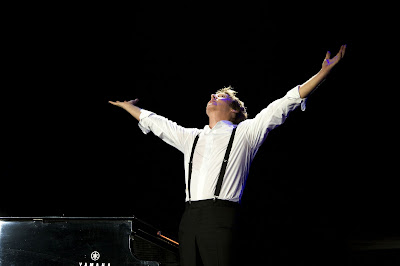
And the mesmerizing experience is well worth it as the concert DVD contained in this set preserves the historic three-night event of McCartney's return to musically christen the new site of the landmark Shea Stadium, which was torn down, rebuilt “a few hundred yards away” and renamed Citi Field. The engagement from July 17-21 critically dubbed “the experience of a lifetime” is especially significant considering McCartney's Good Evening was staged both one year after joining Billy Joel's farewell to Shea Stadium in the last concert before its demolition and forty-four years after The Beatles played the venue and gave birth to stadium rock in 1965.

On August 15, 1965, The Beatles played a twelve song set filling out just thirty-four minutes for 55,600 screaming fans (that also included McCartney's future wife, Linda Eastman) who drowned out the sound of the band during their sold-out performance. And in the three Good Evenings in 2009, 109,397 people gathered in Citi Field to celebrate the lineup captured in this two hour and forty minute concert which consisted of thirty-three songs.


From beloved hits that span the course of his impressive career including rousing renditions of “Drive My Car,” “Band on the Run,” and “Live and Let Die,” and many others, McCartney switches instruments several times throughout. Effortlessly he moves from a ukulele that was given to him by George Harrison to the piano and several guitars including one enviable brightly colored electric model on which he wails Hendrix's “Foxy Lady." And at the same time, Paul McCartney proves that his vocal and instrumental musicality is still top-notch even after all these years.

With footage from longtime collaborator Paul Becher, McCartney thrills us as light beams out onto the audience like snow and video installations change from incredibly well-designed visuals to enhance the meaning of the music with a multimedia approach that mixes nicely with enhanced live closeups of the band at play. Therefore, McCartney's dazzling Evening concert DVD manages to engage us even more than the 2-CD set of the exact same performance since the event transcends just the audio and becomes a full-blown concert right in your living room via the third inconspicuous baseball DVD.


Text ©2009, Film Intuition, LLC; All Rights Reserved. http://www.filmintuition.com
Unauthorized Reproduction or Publication Elsewhere is Strictly Prohibited.
Best Buy Co, Inc.