Along with legendary crooners like Frank Sinatra, Dean Martin, Nat King Cole, Sammy Davis Jr. and Bobby Darin, the great Johnny Mathis recorded some of his very best songs for Sony Music's Columbia Records.
In a bold move by Collectors' Choice Music to re-release the material from Sony-- they decided to "reissue virtually ALL of his ‘60s albums that have never been on CD before." And to this end they selected ten best-selling classic works that the company then divided in half to pair together in five unique 2-CD sets.
Having hit stores and online retailers this week on June 9, Collectors' Choice debuted this all-new collection to fans, augmenting the stellar Columbia records from Johnny Mathis with "detailed liner notes" penned by James Ritz as well the original cover art of the records included in each booklet.
Album Information (Descriptions Provided By Collectors' Choice)
Johnny Mathis: I’ll Buy You a Star/Live It Up!
Of the ten albums we’re reissuing, I’ll Buy You a Star is the only one that’s come out on CD before, but we had to include it because it made such a perfect pairing with Live It Up! Why? Because both of them boast arrangements by the great Nelson Riddle!
Johnny Mathis: Rapture/Romantically
Another perfect Mathis pairing, these 1962 and 1963 albums both featured arrangements by the legendary Don Costa, and both soared to the highest reaches of the charts.
Johnny Mathis: Up, Up and Away/Love Is Blue
These 1967 and 1968 albums marked Johnny’s triumphant return to the Columbia label from Mercury, where he spent the middle part of the decade. They also marked a shift in his repertoire away from the standards that had dominated his previous Columbia albums towards more contemporary material, whose familiar melodies take on a whole new sheen when burnished by Johnny’s ethereal tenor.
Johnny Mathis: Those Were the Days/Love Theme from “Romeo & Juliet”
Johnny Mathis doing a Doors tune? Yup—and doing it well, along with a host of other late-’60s pop favorites on these 1968 and 1969 albums. Robert Mersey, who arranged Johnny’s previous two Columbia albums, conducts on Those Were the Days, while the great Ernie Freeman takes up the baton on Love Theme.
Johnny Mathis: People/The Impossible Dream
Johnny’s warm, mellifluous interpretations on these two 1969 albums will make you hear these songs in a whole new way, even if you’ve heard them hundreds of times. A good example is his dramatically slowed-down reading of “Sunny”; the contemplative, even wistful tone of his performance really gives the “dark days” of the song’s lyrics equal weight to the bright ones, an insight usually lost in the song’s breezier interpretations.
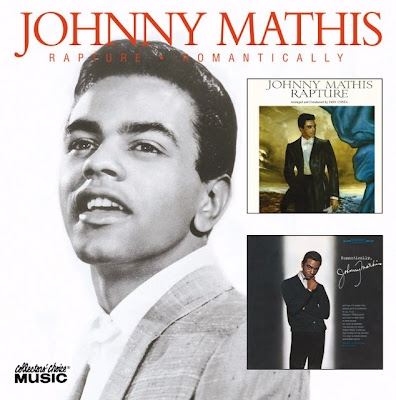
Due to time constraints, I wasn't able to review the albums in great detail but Collectors' Choice Music was kind enough to send the passionate duo of Rapture/Romantically my way.
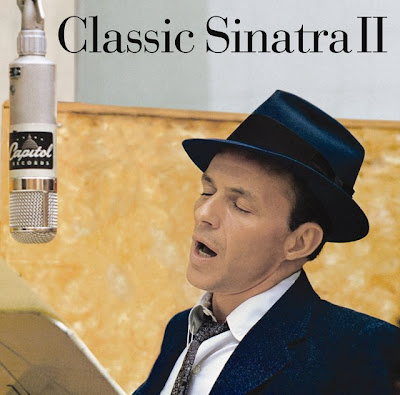
And having always had a reverence for the classic albums produced for all the greats at Sony's Columbia Records including Frank Sinatra whose Classic Sinatra II which consisted entirely of his vintage Columbia studio session I reviewed earlier in the week, I was thrilled to explore the Mathis works as well.
With both albums conducted and arranged by Don Costa to enormous success with record buyers in '62 and '63 respectively, they flow nicely into one another and feature everything from numerous Rodgers and Hammerstein tracks on Romantically to more intense works like the titular "Rapture" on the first album.
Of course while it's impossible to choose a favorite since if you're a fan you probably know the material very well, nonetheless here's a list of what I felt were the top five standouts on both records (in alphabetical order):
Rapture
"I Was Telling Her About You" "Lament (Love, I Found You Gone)" "Love Me As Though There Were No Tomorrow" "My Darling, My Darling" "Rapture"
Romantically
"All That is Missing" "Autumn in New York" "It's Only a Paper Moon" "Moonlight in Vermont" "The Sound of Music"
More About Johnny Mathis (From Collector's Choice Music)
"In early 1956 a young man was faced with a life-altering dilemma that could have had dire consequences had he not chosen the right course. Having been a star athlete in both high school and college, he was invited to attend the trials for the U. S. Olympic track-and-field team. But he was also blessed with a unique voice and vocal style that caught the eye of Columbia Records executives and was asked to come to New York to begin work on his first recording session.
"Prompted by his father, 21-year old John Royce Mathis chose the latter and passed on his opportunity to become a member of the Olympic team, opting instead for a chance to break into the uncertain world of popular music. A half-century later he has yet to look back.
"Over the course of those 50+ years, Johnny Mathis has sold several hundred million records and has become one of the most beloved voices in popular music. Over the span of his first three decades he charted nearly four dozen singles on the best seller charts, including such seminal romantic ballads as "Wonderful! Wonderful!," "It’s Not For Me To Say," "The Twelfth Of Never" and "Chances Are" (his first of two #1s).
But Mathis’ real staying power has been as an album seller; his Johnny’s Greatest Hits (the record industry’s FIRST greatest hits package) alone stayed on the charts for an incredible 9 ½ years and by most accounts next to Frank Sinatra, he’s been the most consistent album-seller of the modern era, having recorded upwards of 75 original collections."
In Classic Sinatra II, the legendary blue-eyed crooner may chide, "'Scuse me while I disappear," but the thing about Frank Sinatra is that he's never disappeared whether when he was alive and actively recording or even now long after his death since vocally nobody can touch him.
Of course some singers such as Dean Martin came close and on certain tracks, Martin's mischievous whimsy and humor does indeed surpass that of his friend. However, Martin's partner in hedonistic fun as part of the notoriously legendary Rat Pack a.k.a. the so-dubbed "Chairman of the Board" was also nicknamed "The Voice" for a reason since it was because of that purely smooth yet rich as honey delivery that made Frank Sinatra "the only artist to chart in Billboard's Top Ten for seven consecutive decades."
Nine years after the original double platinum release by Capitol/EMI and Frank Sinatra Enterprises (FSE), Classic Sinatra's appropriately titled sequel Classic Sinatra II makes its debut this June and picks up where its wildly successful predecessor left off-- boasting a remarkable lineup of twenty-one recordings from 1954 to 1961 including one never-before-released track.
In doing so, the album's predictably exceptional array of some of 'Ol Blue Eyes' most beloved hits kicks off with "Something's Gotta Give." Starting the album on a swinging jazz note, the song benefits from the great effort of that particular tune's conductor and arranger Billy May. Yet, I was especially struck by some of the disc's lost classics including May's contemplative and sweepingly orchestral almost Peyton Place or Douglas Sirk film soundtrack style arrangement of Sinatra's romantic "Moonlight in Vermont."
Of course, nobody seduces or serenades quite like Frank Sinatra, whether he's singing For Swingin' Lovers or Only For the Lonely as the titles of some of his conceptual Capitol records notes. And throughout the course of the CD, I was enraptured by the versatility of his vocal instrument and the way he was able to continually adjust his phrasing and style to perfectly suit the character of the song.
And this is decidedly not an easy feat as-- again and again in what now sadly passes for contemporary jazz-- some best-selling vocalists find one signature style and perform every single piece in exactly the same manner. Moreover, I was increasingly inspired by the way he sings directly to his audience, teasing them, lamenting a heartbreak or a woman he'd wronged, or wholeheartedly embracing the all-encompassing joy of upbeat swing.
Whether he manages to match the exuberance of angelic, nursery-rhyme style children in "High Hopes"-- which should make even the most cynical of listeners burst into a beaming smile-- or immerses himself completely along with this album's most frequent arranger and conductor Nelson Riddle's experimentation, he never fails to put his individual stamp on a piece of music.
And in one positively perfect example, he livens up the oft-covered standard "All Of Me" by singing it slowly first before moving into a breathless manic rhythm, amazingly completing it in a whirlwind of just two minutes that captures the true meaning of the lyrics in a decidedly unique way.
Needless to say it's a flawless collection both to fans as well as musicians working in the genre and one wherein the lineup manages to showcase his versatility with its clever pairing of certain songs, making us hear them in a new light. And in doing so, the producers dared to pair together "High Hopes" with the heavenly downer "Learnin' the Blues" and surprisingly move from an intriguing take on "I've Got A Crush On You"-- which finds Sinatra abandoning strict enunciation of every syllable in favor of stringing the words together like a jeweler making a diamond necklace-- before he succumbs once more to tragedy with the unforgettable "Guess I'll Hang My Tears Out To Dry."
Additionally serving up some favorites including "Love and Marriage" (guaranteed to get stuck in your head for days!), "Too Marvelous for Words," "From this Moment On," "(Love is) The Tender Trap," "I Thought About You," "Pennies From Heaven," "Just One of Those Things," and "Love Is Here To Stay," among others-- Classic Sinatra II is of collectible interest to devoted fans as the romantic magician of a musician's album is closed with the previously unreleased recording of Sinatra's take on "This Can't Be Love."
Highly recommended and one that makes me instantly want to rush out and pick up the first album which I missed--Classic Sinatra II is available both in CD form as well as via digital download, ensuring that The Chairman of the Board will never disappear and instead just grow stronger from one year to the next as we revisit his tremendous musical output and style which is eloquently personified via these vintage offerings from Capitol Records.
Frank Sinatra: Classic Sinatra II (CD, Digital Album)
Track-Listing & Details
1. Something's Gotta Give Originally Recorded in 1958 Arranged and Conducted by Billy May From the Capitol Records album Come Dance With Me! (1959)
2. Too Marvelous For Words Originally Recorded in 1956 Arranged and Conducted by Nelson Riddle From the Capitol Records album Songs For Swingin’ Lovers! (1956)
3. Love And Marriage Originally Recorded in 1955 Arranged and Conducted by Nelson Riddle From the Capitol Records album This Is Sinatra! (1956)
4. From This Moment On Originally Recorded in 1956 Arranged and Conducted by Nelson Riddle From the Capitol Records album A Swingin’ Affair! (1957)
5. (Love Is) The Tender Trap Originally Recorded in 1955 Arranged and Conducted by Nelson Riddle From the Capitol Records album This Is Sinatra! (1956)
6. I Get Along Without You Very Well Originally Recorded in 1955 Arranged and Conducted by Nelson Riddle From the Capitol Records album In The Wee Small Hours (1955)
7. All Of Me Originally Recorded in 1954 Arranged and Conducted by Nelson Riddle From the Capitol Records album Swing Easy! (1954)
8. I Thought About You Originally Recorded in 1956 Arranged and Conducted by Nelson Riddle From the Capitol Records album Songs For Swingin’ Lovers! (1956)
9. Moonlight In Vermont Originally Recorded in 1957 Arranged and Conducted by Billy May From the Capitol Records album Come Fly With Me (1958)
10. High Hopes Originally Recorded in 1959 Arranged and Conducted by Nelson Riddle From the Capitol Records album All The Way (1961)
11. Learnin' The Blues Originally Recorded in 1955 Arranged and Conducted by Nelson Riddle From the Capitol Records album This Is Sinatra! (1956)
12. Here's That Rainy Day Originally Recorded in 1959 Conducted by Gordon Jenkins From the Capitol Records album No One Cares (1959)
13. Pennies From Heaven Originally Recorded in 1956 Arranged and Conducted by Nelson Riddle From the Capitol Records album Songs For Swingin’ Lovers! (1956)
14. I've Got A Crush On You Originally Recorded in 1960 Arranged and Conducted by Nelson Riddle From the Capitol Records album Nice ‘N’ Easy (1960)
15. Guess I'll Hang My Tears Out To Dry Originally Recorded in 1958 Arranged and Conducted by Nelson Riddle From the Capitol Records album Frank Sinatra Sings For Only The Lonely (1958)
16. Memories Of You Originally Recorded in 1956 Arranged and Conducted by Nelson Riddle (Album Information Not Included)
17. Love Is Here To Stay Originally Recorded in 1955 Arranged and Conducted by Nelson Riddle From the Capitol Records album Songs For Swingin’ Lovers! (1956)
18. When The World Was Young Originally Recorded in 1961 Arranged and Conducted by Axel Stordahl From the Capitol Records album Point Of No Return (1962)
19. Just One Of Those Things Originally Recorded in 1954 Arranged and Conducted by Nelson Riddle From the Capitol Records album Swing Easy! (1954)
20. Angel Eyes Originally Recorded in 1958 Arranged and Conducted by Nelson Riddle From the Capitol Records album Frank Sinatra Sings For Only The Lonely (1958)
BONUS TRACK 21. This Can’t Be Love Previously unreleased recording (No Other Details Given)
By “showing up day after day,” Rosemary Clooney left a legacy of remarkable recordings including this one.
As she sings in the eighteenth and final track — "I Get a Kick Out of You" -- in this remarkable collection from Acrobat Music, Rosemary Clooney opens with the lyrics, “My story is much too sad to be told.” Little did listeners tuning into these radio broadcasts realize that when it came to that particular phrase, she may as well have been referencing herself. And this is precisely because from her very first recording Rosemary Clooney possessed that innate gift that few singers have. Namely, she managed to find the heart of each unique song while interpreting the lyrics completely in the character of the piece.
While by now it’s become nearly a prerequisite for jazz musicians and vocalists to have dealt with enormous personal tragedy, as so many of the giants of that era are no longer with us, when you even glance at the shortest of summaries about the life of Ms. Rosemary Clooney: “Girl Singer” as she so dubbed herself in her 1999 autobiography (adding to her original 1977 memoir This for Remembrance), you realize that she overcame many, many more than her fair share.
Right from the start, Clooney survived an immensely difficult childhood of abandonment by both her dress-maker mother, who fled to California with Clooney’s brother to marry a sailor, and her alcoholic father, who took the household money and vanished one evening. Fortunately, Rosemary and her sister Betty first earned their big break and enough money to buy their own school lunches in their darkest hour winning “a spot on Cincinnati’s radio station WLW as singers” in 1945. After working alongside bandleader Tony Pastor for a few years, Betty returned to Cincinnati and later Rosemary ventured off to New York City at the tender age of 21. It was there that she ultimately became a recording artist with Columbia Records, striking her first big hit with the song she loathed, “Come-On-a My House.”
It was around this same time, in the early 1950s that Rosemary Clooney became a staple on popular “star-studded variety programs” crafted by radio executives to combat “the growing magnetism of television.” In this extraordinary reissue of some of these vintage recordings that were originally made for radio, we hear a Clooney whom Acrobat Music’s press notes reveal had begun “validating her position among the fine jazz-based vocalists in American music.” While she would later become far more famous for her versions of standards and novelty hits in the same vein as “Come-On-a My House,” including “Botch-a-Me” and “Mambo Italiano,” in this wonderfully diverse release of rare performances, we hear some of Rosemary’s earliest professional recordings as she was still finding her vocal style.
With a natural gift that’s evident right away in such classics as Arthur Johnston and Sam Coslow’s “My Old Flame,” and George and Ira Gershwin’s “But Not For Me” from the show Girl Crazy, the wistful and melancholic Clooney gives way to a more polished vibe midway through. Soon she teases us with “If This Isn’t Love,” from Finian’s Rainbow and the Rodgers and Hart song you can float away on, “Manhattan." With that, she warms up with the first of a hat-trick followed up by a great delivery of “You Make Me Feel So Young” and an intriguing maternal sounding take on “All the Pretty Little Horses,” which was recorded years before she gave birth
to the first of five children with husband Jose Ferrer (whom she married and divorced twice).
Later, the album moves into some of her most unabashedly romantic tracks like “I’m Only Ambitious For You,” and the slightly shocking “Thrill Me,” which seems to foreshadow her marriage that took place in 1953. And ending this era of recordings with the sixteenth inclusion, “Too Much Conversation,” it marks a great progression from the sixteen first tracks to the bonus final two. The album ends with “Everything’s Coming Up Roses” and “I Get a Kick Out of You” recorded in 1959 after years of experience as well as personal struggles and battles with addiction found Clooney’s voice sounding far more mature and worldly. In doing so, it was an awesome decision to break popular protocol of only including tracks from one specific and succinct time-period to illustrate the ways that Clooney had changed with more vocal mastery.
Yet the sheer gorgeous arrangements and exceptional nostalgic recording made with accompaniment from the Earl Shelton Orchestra in 1951/2 which as the press release stated, perfectly “captures Rosemary as her star is rising,” is a must-own for devotees of the singer whom the late great Frank Sinatra once called not only “a symbol of good modern American music” but one with that “great talent which exudes warmth and feeling in every song she sings.”
A remarkable woman, she found herself surviving an endless number of personal ups and downs as she stood just a few feet away from her close friend and Presidential nominee Robert F. Kennedy when he was assassinated which led to a very public breakdown.
The 1970s found Clooney back on a personal and professional upswing when her good friend Bing Crosby included her in his 50th and final anniversary tour in 1976. While that same year marked her comeback, it also came sadly along with the death of her sister Betty from a brain aneurysm. Rosemary, who was always devoted to her immediate and extended family (including her nephew Mr. George Clooney who lived with his aunt during his own rise to fame) created the Betty Clooney Center in Long Beach, California which was a facility dedicated to “brain-injured young adults,” and one that was the “first of its kind in the U.S.”
The humble woman who said that her accolades were just “for showing up day after day,” later added to the Washington Post that as “the only instrument that’s got the words… I’ve got to be able to get that across,” and the proof is as simple as in listening to any one of her phenomenal recordings, none more so than in some of her earliest served up in this one-of-a-kind collection from Acrobat Music Inc. releasing on 10/21.
So while in the end she sang that her story was one that was far “too sad to be told,” perhaps her greatest testament not only with regard to her loyalty to family and friends was in inhabiting the characters of so many songs. And in the same token, by inviting us to share in her interpretations as she honored all kinds of individuals whose stories should be told including her own and honored us at the same time — both in celebration of her listeners and in “showing up day after day.”
Walking Movie Encyclopedia at Film Intuition; 3-Time National Award Winning Scribe; Film Reviewer; "Watch With Jen" Podcast Host; Screenwriter; Movie Discussion Host; BA in Film Studies & Communication.